arXiv:2607.26924 · Preprint
Temporally Centered SIGReg Improves LeWorldModel Representations for Robot Policy Learning
Graduate School of Engineering, The University of Tokyo · †Corresponding author
{chang.liu,yaonan.zhu}[at]weblab.t.u-tokyo.ac.jp
Why this matters
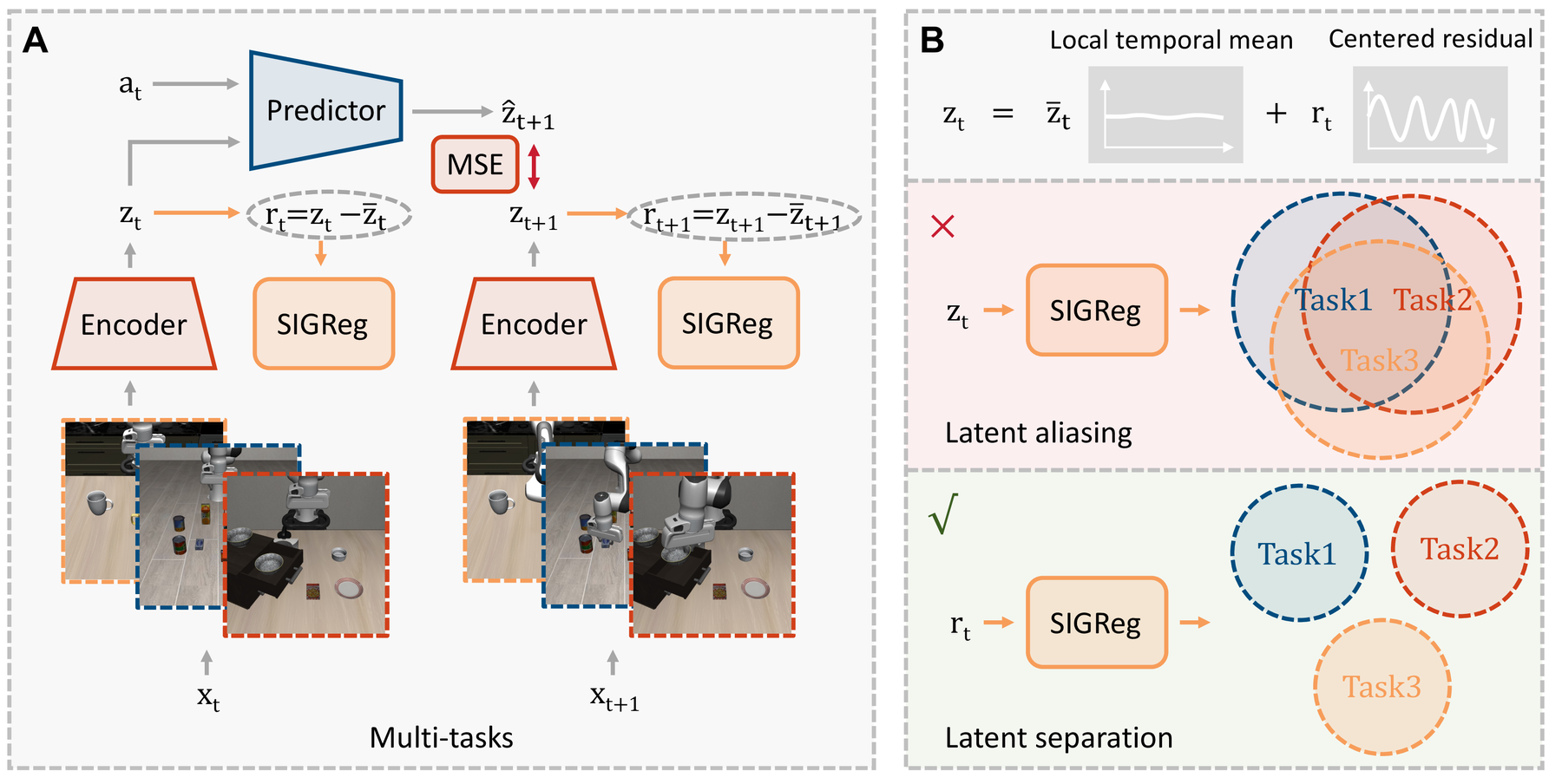
LeWorldModel (LeWM) learns predictive representations directly from pixels and uses SIGReg to prevent representation collapse. We ask a different question: are these world-model representations also well suited for downstream robot policy learning?
On LIBERO-Long, Raw LeWM remains limited even as world-model training scales up. A frozen Raw LeWM encoder gives 26.1% average success under independent single-task training, 44.7% under suite-wise 10-task training, and 52.0% when the world model is trained on all 40 LIBERO tasks. More data helps, but does not remove the downstream representation gap.
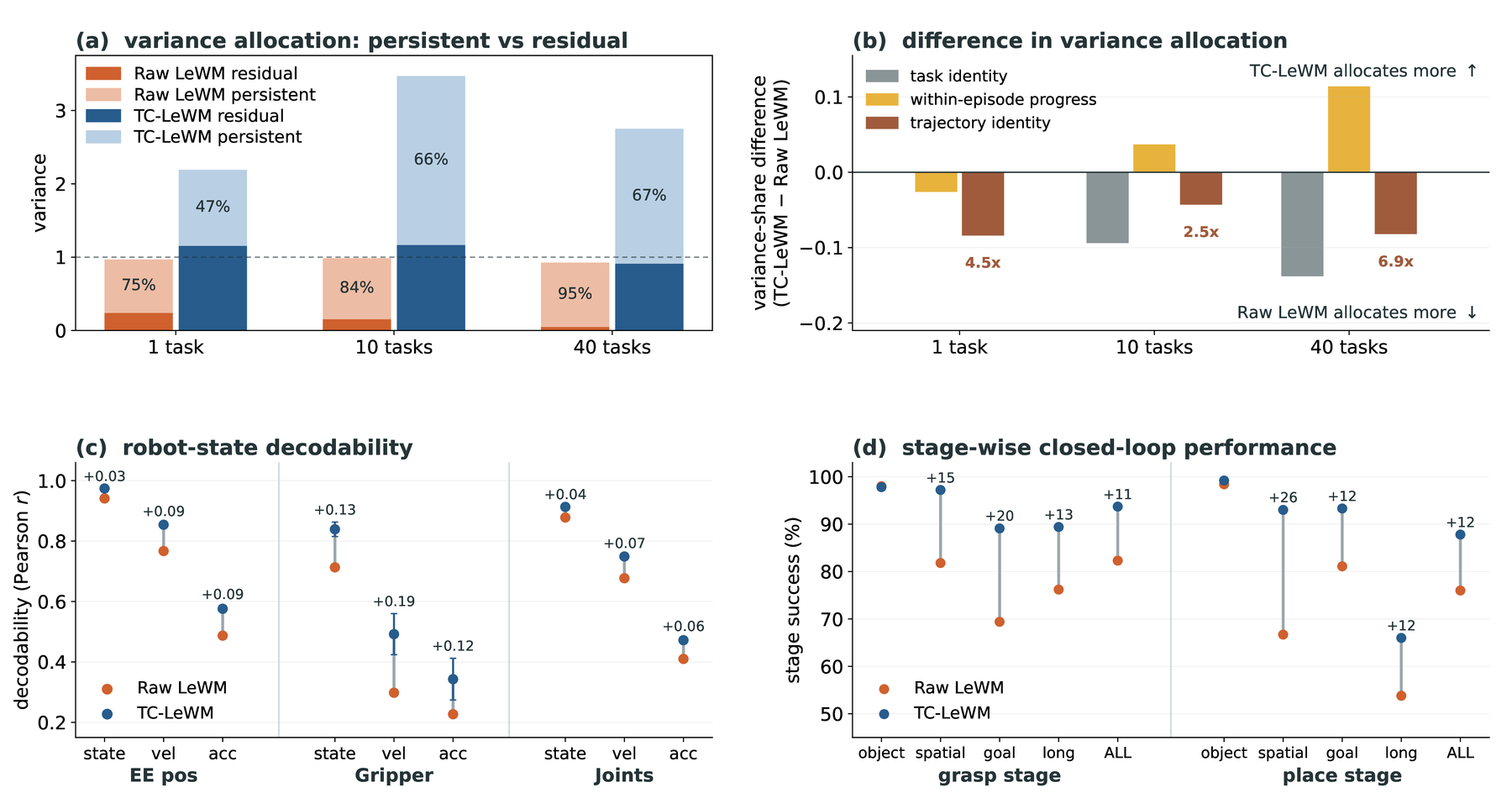
Our analysis points to a specific mechanism: the Raw LeWM objective biases variance allocation toward temporally persistent information and suppresses the temporally centered residual—the part of the representation that captures complementary within-window change.
Why Raw LeWM suppresses residual variation
We decompose each latent as zt = z̄t + rt, where z̄t is the temporally persistent component and rt is the centered residual. Along a random SIGReg projection, the same decomposition becomes x = c + ε.
We then construct a controlled Monte Carlo surrogate of the Raw LeWM objective. The Epps–Pulley criterion used by SIGReg favors a projected marginal close to a standard Gaussian and therefore favors projected variance near one. Under the zero-cross-covariance setting, var(x) = var(c) + var(ε). This couples the persistent and residual components through a shared near-unit variance budget. At the same time, the prediction objective favors smaller residual variation. Together, the two terms bias variance allocation toward the persistent component.
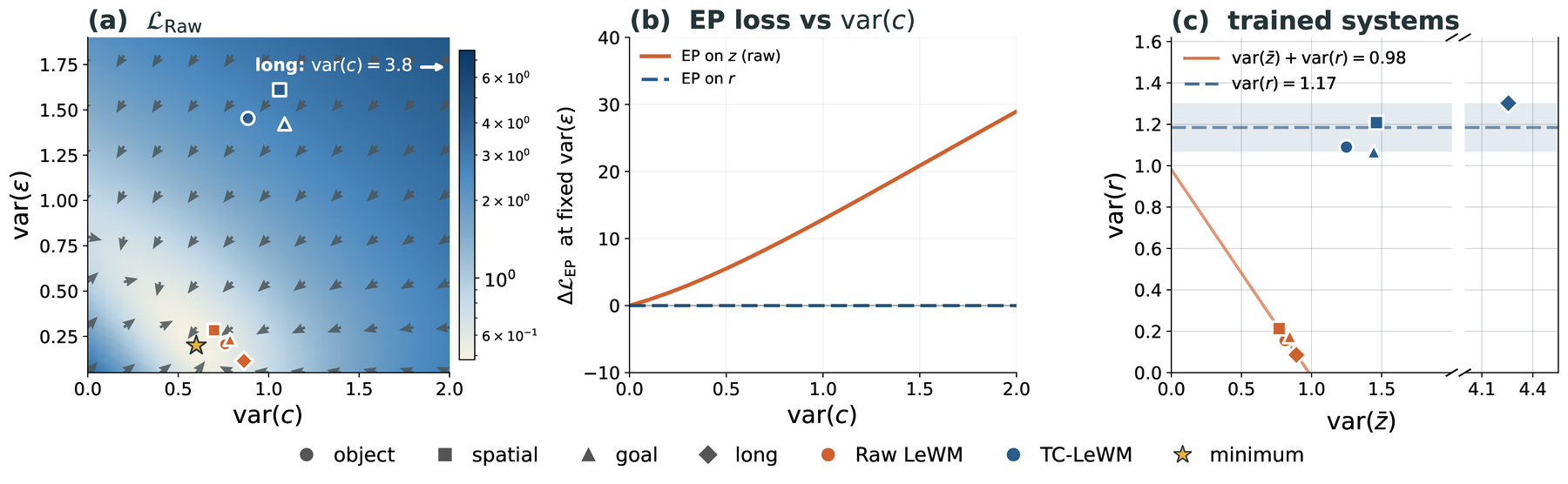
This matters for downstream manipulation because suppressing centered-residual variation can make fine-grained robot state and dynamics less accessible from the learned representation. In our trained models, Raw LeWM indeed shows lower linear decodability of robot state and dynamics, particularly gripper dynamics.
TC-LeWM: change where SIGReg acts
The fix is simple: regularize the temporally centered residual instead of the full latent representation. The encoder, predictor, prediction loss, and downstream policy protocol are unchanged.
| Method | Objective |
|---|---|
| Raw LeWM | L_pred + λ · SIGReg( { z_t } ) |
| TC-LeWM (ours) | L_pred + λ · SIGReg( { r_t } ), r_t = z_t − z̄_t |
In Raw LeWM, the persistent component and centered residual must jointly satisfy the SIGReg target. In TC-LeWM, SIGReg acts directly on the residual, so persistent variation no longer trades off against residual variance to satisfy the same projected target.
TC-LeWM also retains an effective anti-collapse property: if the representation becomes constant within a temporal window, then rt = 0 and every projected residual degenerates at zero, which is strongly penalized by the EP criterion.
Closed-loop robot policy learning
TC-LeWM improves downstream behavior-cloning performance at all three world-model training scales. Under suite-wise 10-task training, it raises the four-suite average from 63.6% to 83.8%; under unified 40-task world-model training, it raises the average from 72.6% to 85.4%.
Suite-wise 10-task training
| Method | Spatial | Object | Goal | Long | Avg. |
|---|---|---|---|---|---|
| Pre-trained methods | |||||
| Octo (fine-tuned) | 78.9 | 85.7 | 84.6 | 51.1 | 75.1 |
| OpenVLA (fine-tuned) | 84.7 | 88.4 | 79.2 | 53.7 | 76.5 |
| π0.5 (fine-tuned) | 98.8 | 98.2 | 98.0 | 92.4 | 96.9 |
| From-scratch methods | |||||
| Diffusion Policy | 78.3 | 92.5 | 68.3 | 50.5 | 72.4 |
| Raw LeWM | 62.4±7.5 | 93.9±2.3 | 53.4±5.3 | 44.7±4.3 | 63.6 |
| TC-LeWM (ours) | 86.0±4.1 | 97.0±0.1 | 88.4±7.5 | 63.6±6.8 | 83.8 |
Closed-loop success rates (%). Raw LeWM and TC-LeWM are mean±std over three full-pipeline training seeds. Diffusion Policy, Octo, and OpenVLA results are taken from Kim et al.; π0.5 results are taken from Black et al. TC-LeWM is trained from scratch and outperforms Diffusion Policy, Octo, and OpenVLA in this evaluation, while pretrained π0.5 remains stronger.
Independent single-task training
| Method | T0 | T1 | T2 | T3 | T4 | T5 | T6 | T7 | T8 | T9 | Avg. |
|---|---|---|---|---|---|---|---|---|---|---|---|
| Raw LeWM | 53.1 | 37.5 | 12.4 | 11.8 | 11.6 | 13.6 | 29.8 | 28.7 | 17.8 | 44.7 | 26.1 |
| TC-LeWM (ours) | 85.1 | 68.5 | 75.6 | 25.6 | 36.2 | 37.8 | 42.9 | 39.1 | 34.9 | 55.3 | 50.1 |
| Δ (TC − Raw) | +32.0 | +31.0 | +63.2 | +13.8 | +24.6 | +24.2 | +13.1 | +10.4 | +17.1 | +10.6 | +24.0 |
Per-task closed-loop success rates (%) on the ten LIBERO-Long tasks, averaged over three training seeds and three evaluation seeds. TC-LeWM improves all ten tasks.
Unified 40-task world model training
| Method | Spatial | Object | Goal | Long | Avg. |
|---|---|---|---|---|---|
| Raw LeWM | 62.1±11.1 | 95.1±1.0 | 81.0±4.7 | 52.0±4.3 | 72.6 |
| TC-LeWM (ours) | 92.5±3.0 | 97.1±1.3 | 89.7±2.5 | 62.3±4.3 | 85.4 |
| Δ (TC − Raw) | +30.4 | +2.0 | +8.7 | +10.3 | +12.8 |
All four LIBERO suites share one encoder and latent predictor, while a separate task-conditioned downstream policy is trained for each suite. Mean±std over three full-pipeline training seeds, each evaluated with three evaluation seeds and 50 rollouts per task.
Closed-loop examples
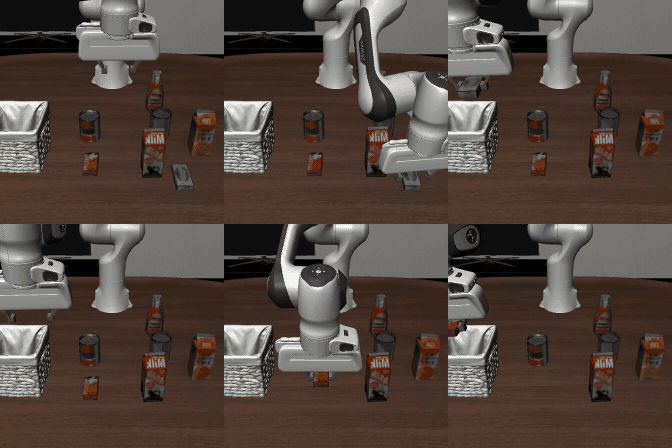
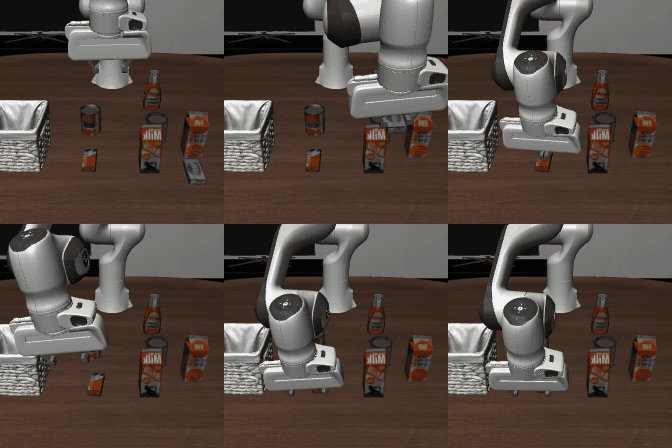
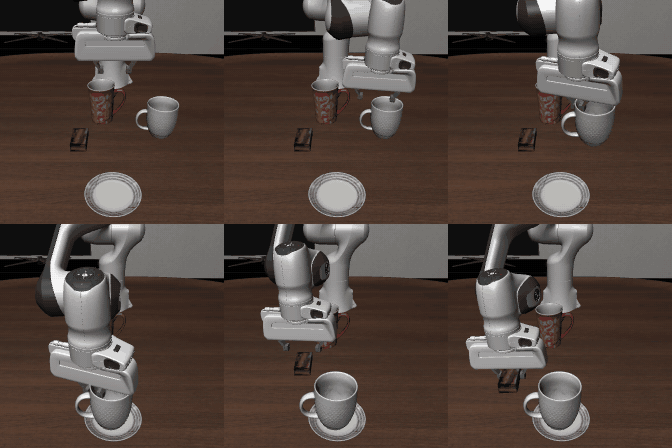
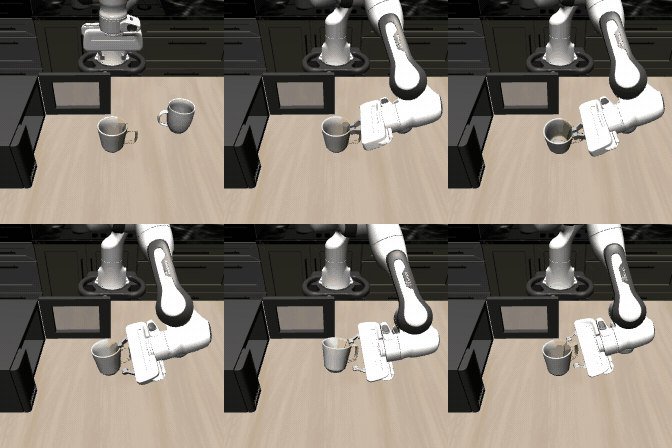
Example rollouts from the suite-wise 10-task setting. Raw LeWM and TC-LeWM use the same task, initial scene, and evaluation protocol.
“put both the cream cheese box and the butter in the basket”
 SUCCESS
 FAIL
FAIL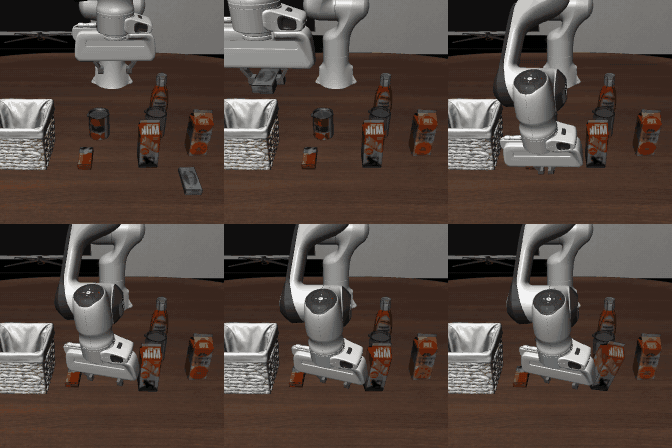 FAIL
FAIL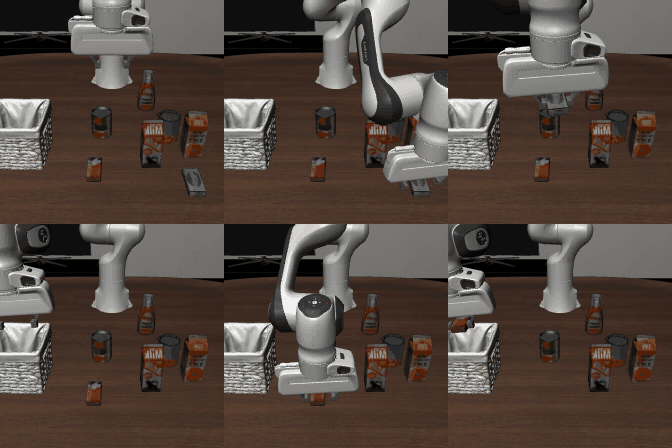 SUCCESS
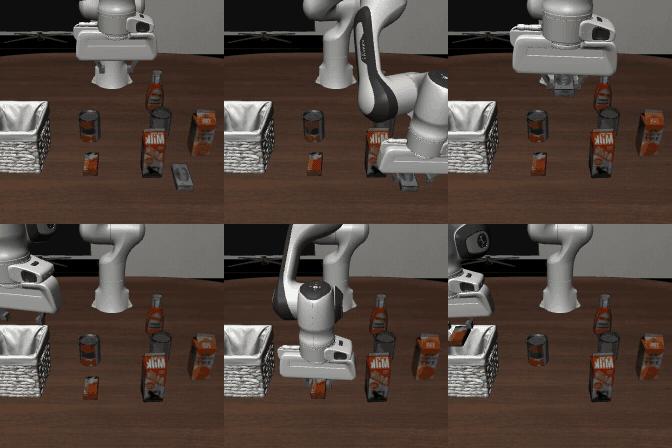 SUCCESS
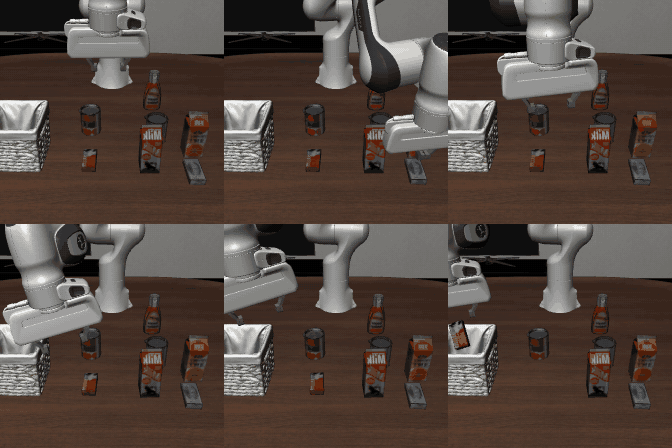 FAIL
FAIL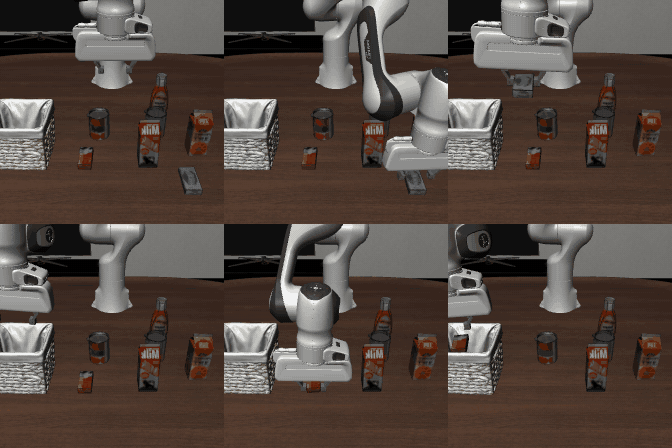 SUCCESS
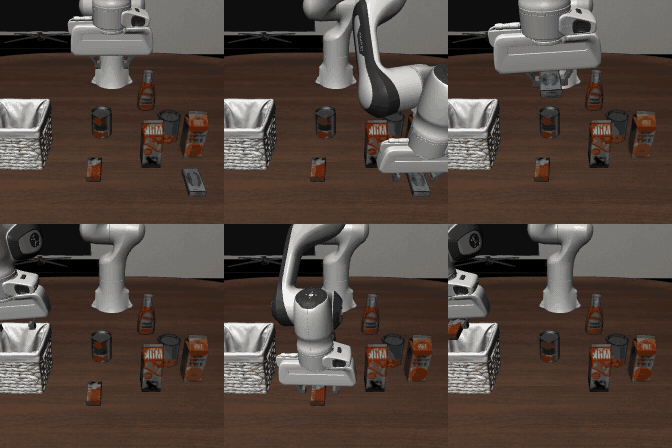 SUCCESS
“turn on the stove and put the moka pot on it”
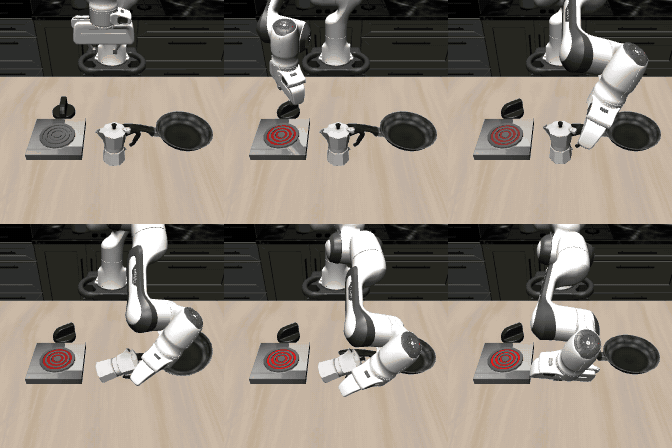 FAIL
FAIL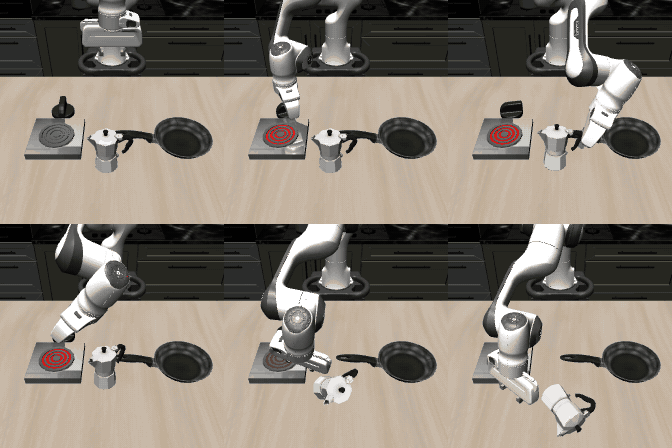 FAIL
FAIL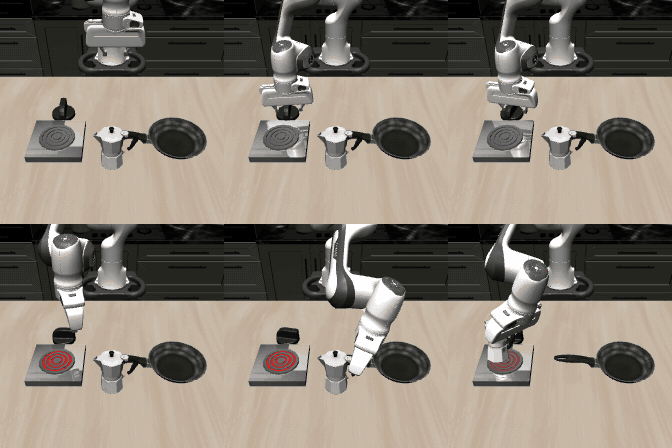 SUCCESS
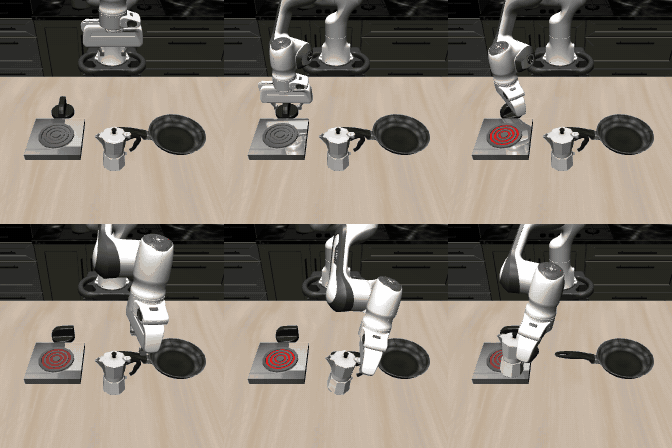 SUCCESS
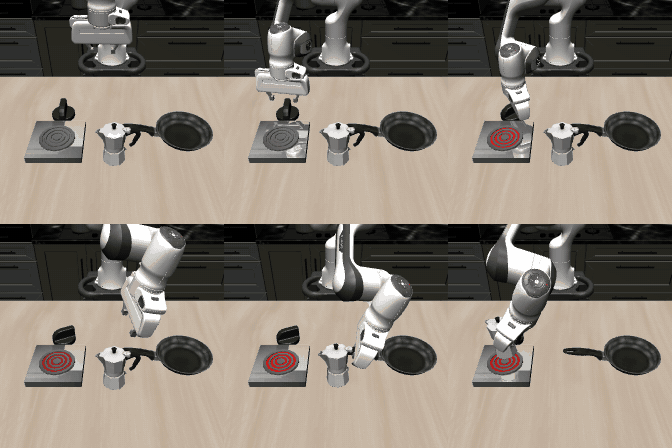 SUCCESS
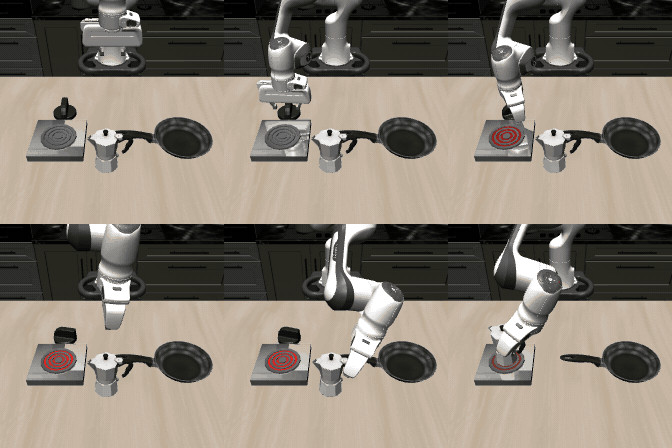 SUCCESS
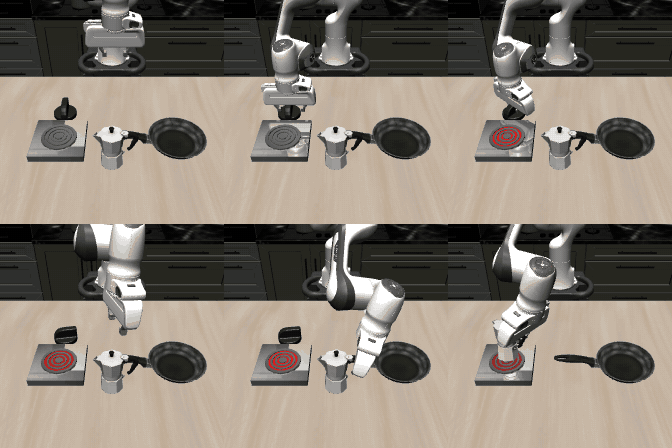 SUCCESS
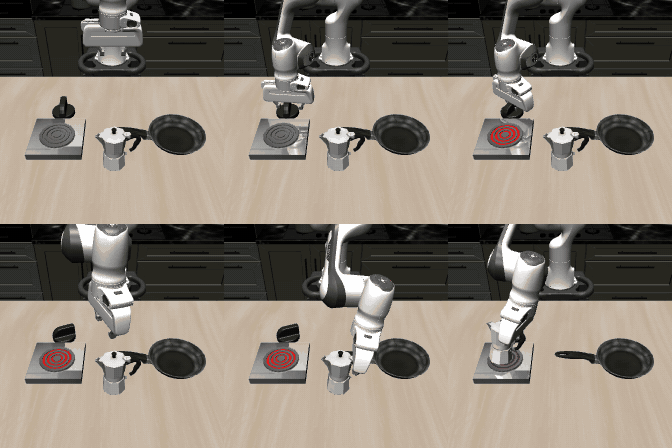 SUCCESS
“put the black bowl in the bottom drawer of the cabinet and close it”
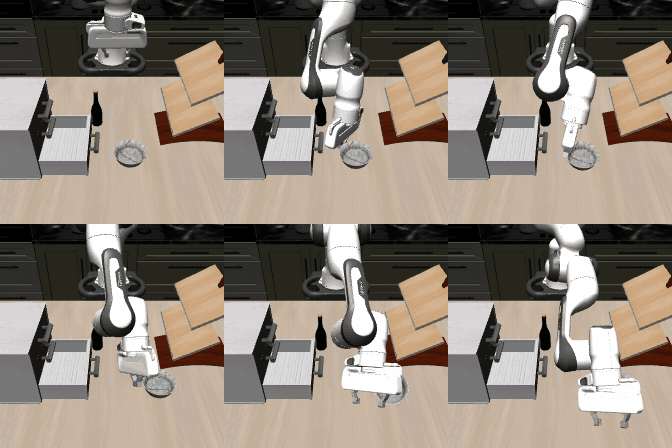 FAIL
FAIL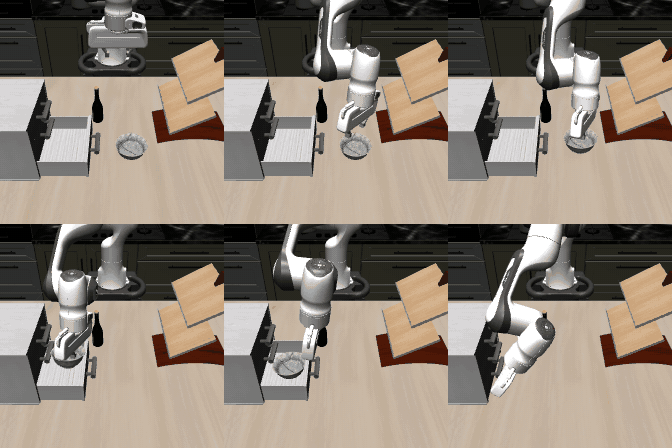 SUCCESS
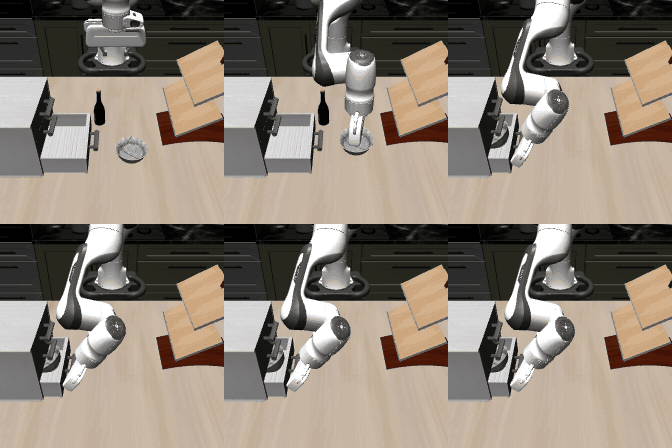 FAIL
FAIL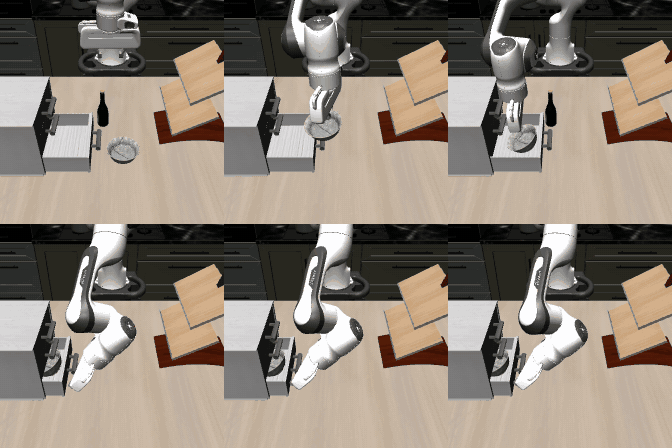 FAIL
FAIL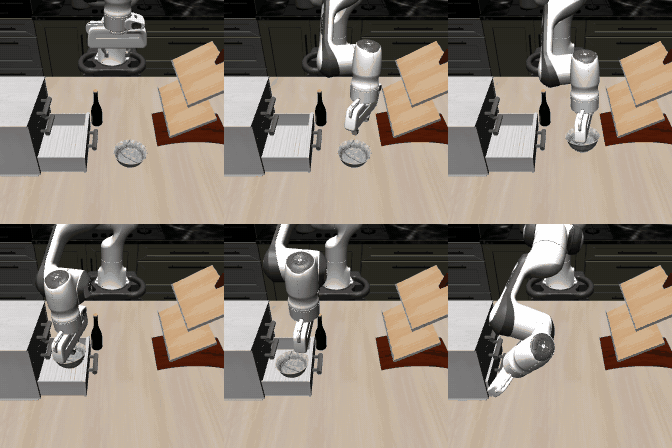 SUCCESS
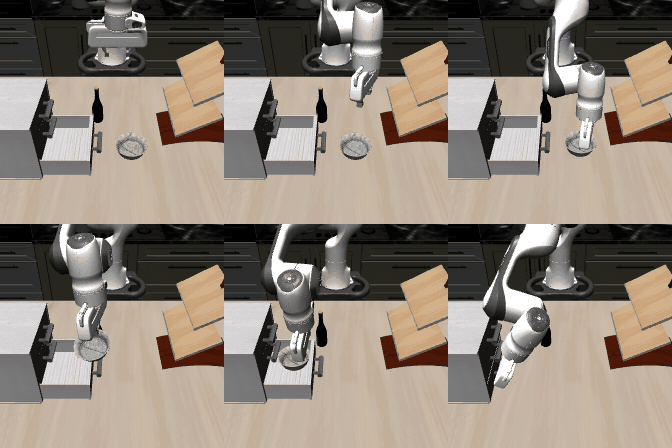 SUCCESS
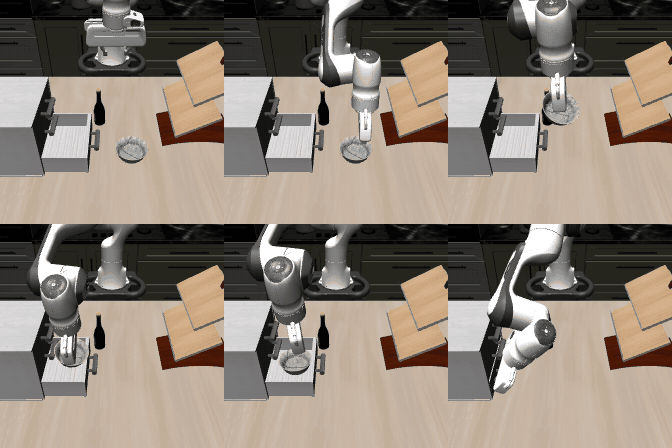 SUCCESS
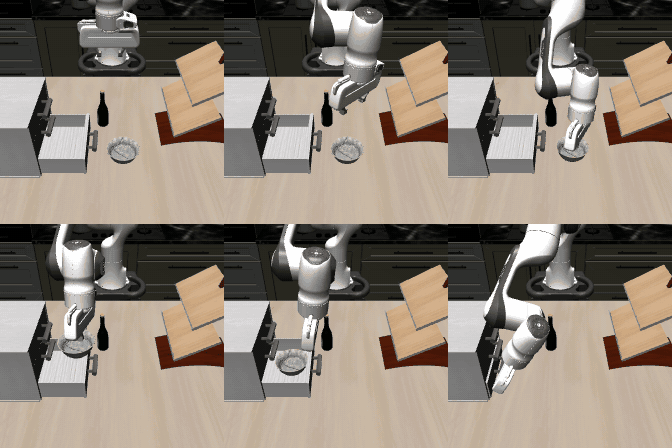 SUCCESS
“put the white mug on the plate and put the chocolate pudding to the right of the plate”
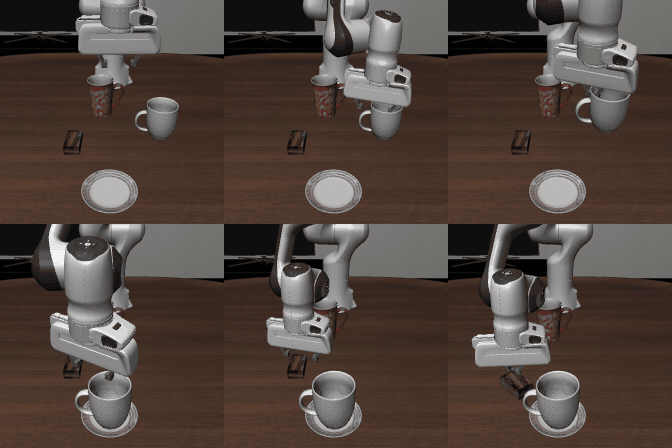 SUCCESS
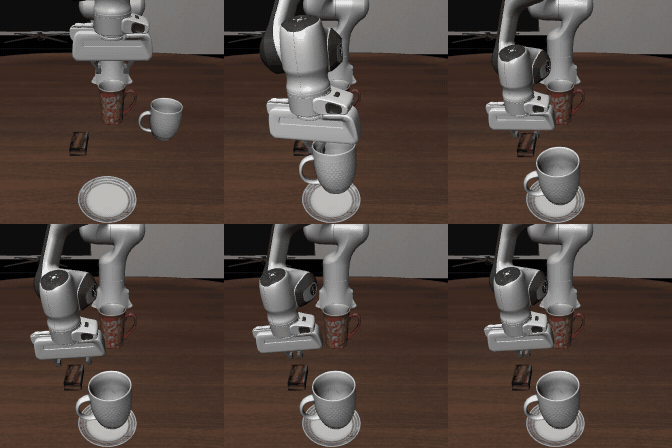 FAIL
FAIL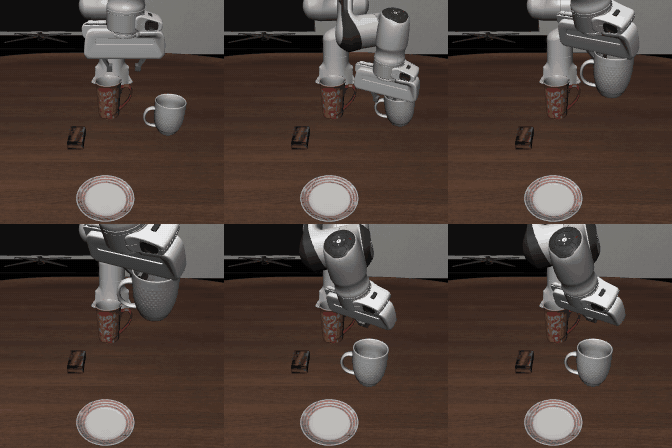 FAIL
FAIL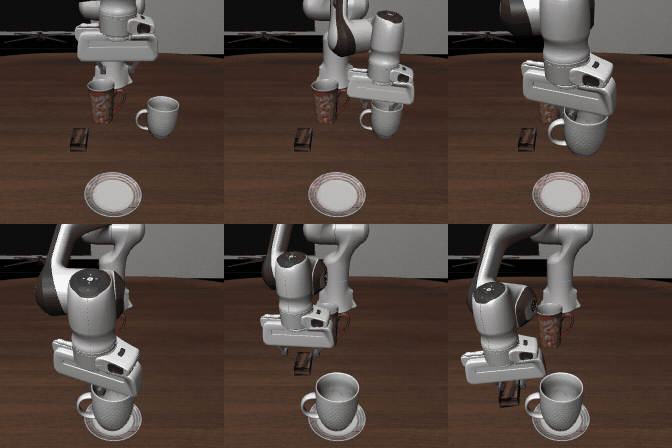 SUCCESS
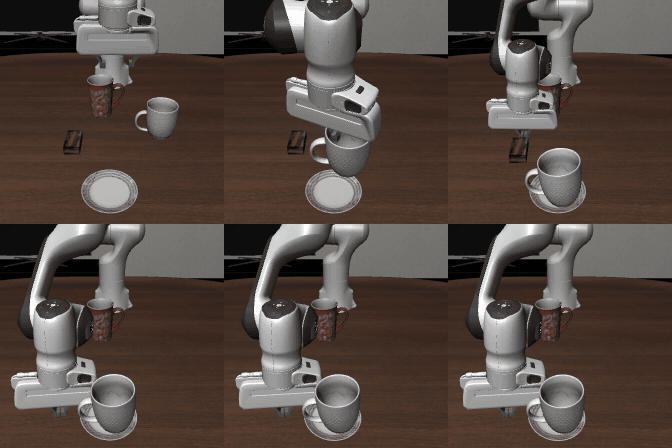 FAIL
FAIL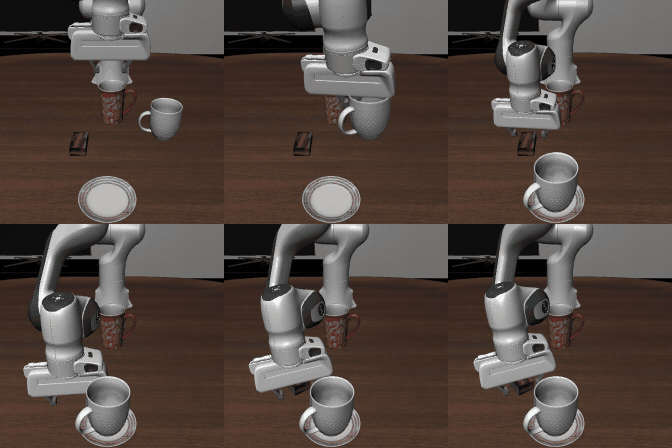 FAIL
FAIL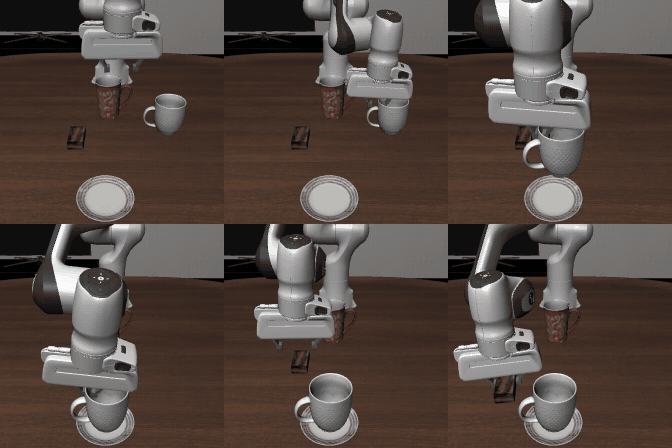 SUCCESS
 SUCCESS
“put the yellow and white mug in the microwave and close it”
 FAIL
FAIL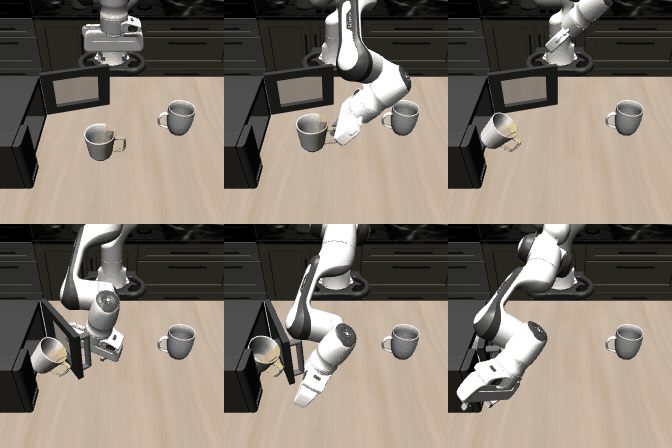 FAIL
FAIL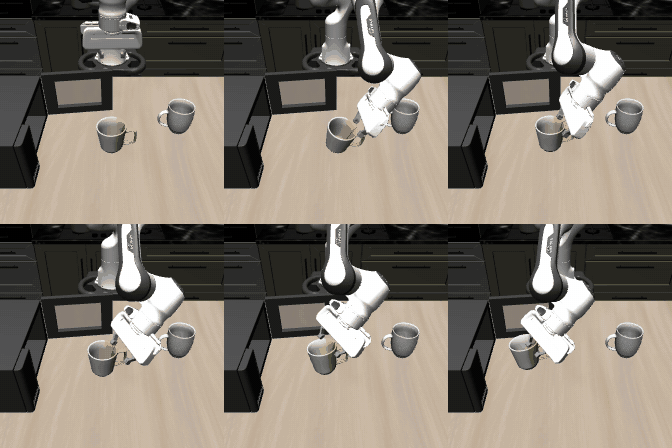 FAIL
FAIL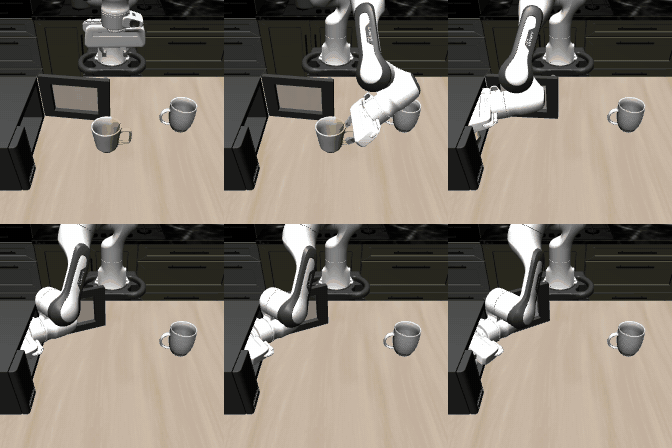 FAIL
FAIL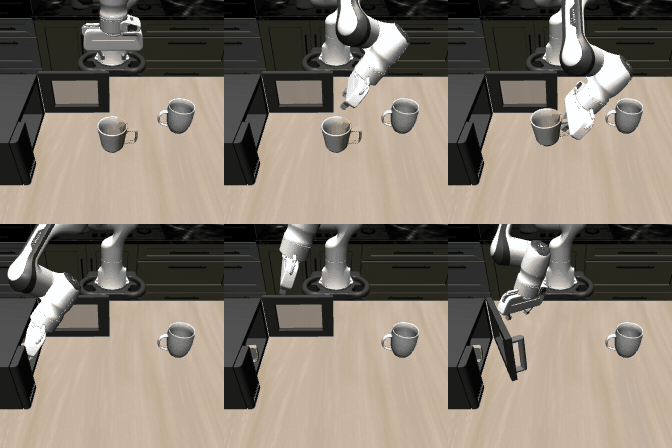 SUCCESS
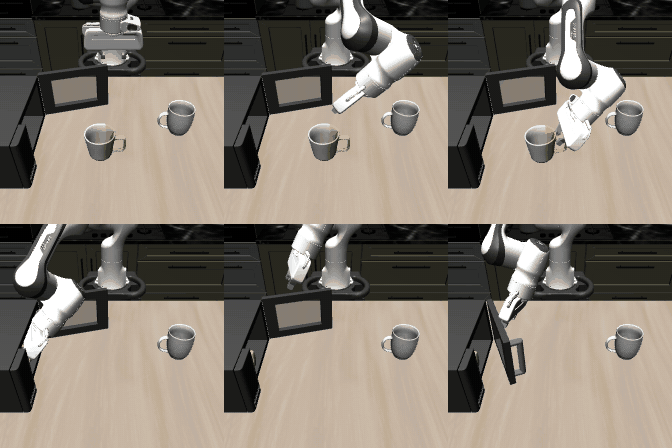 SUCCESS
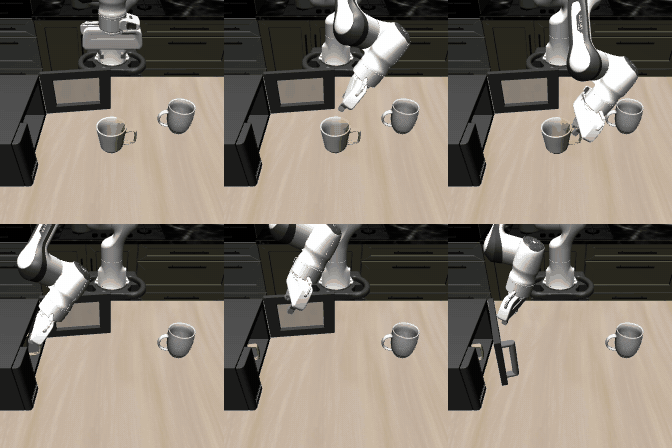 SUCCESS
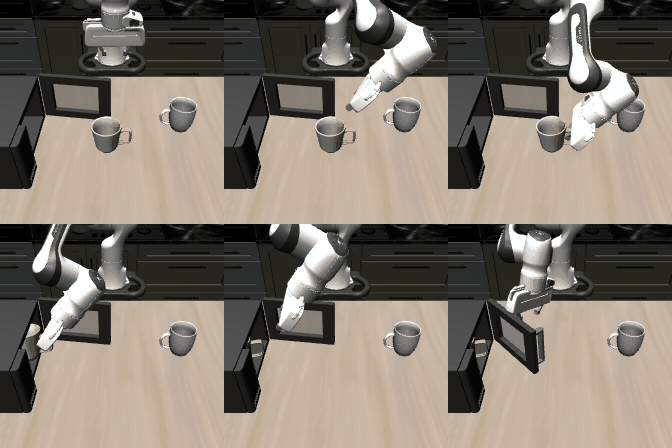 SUCCESS
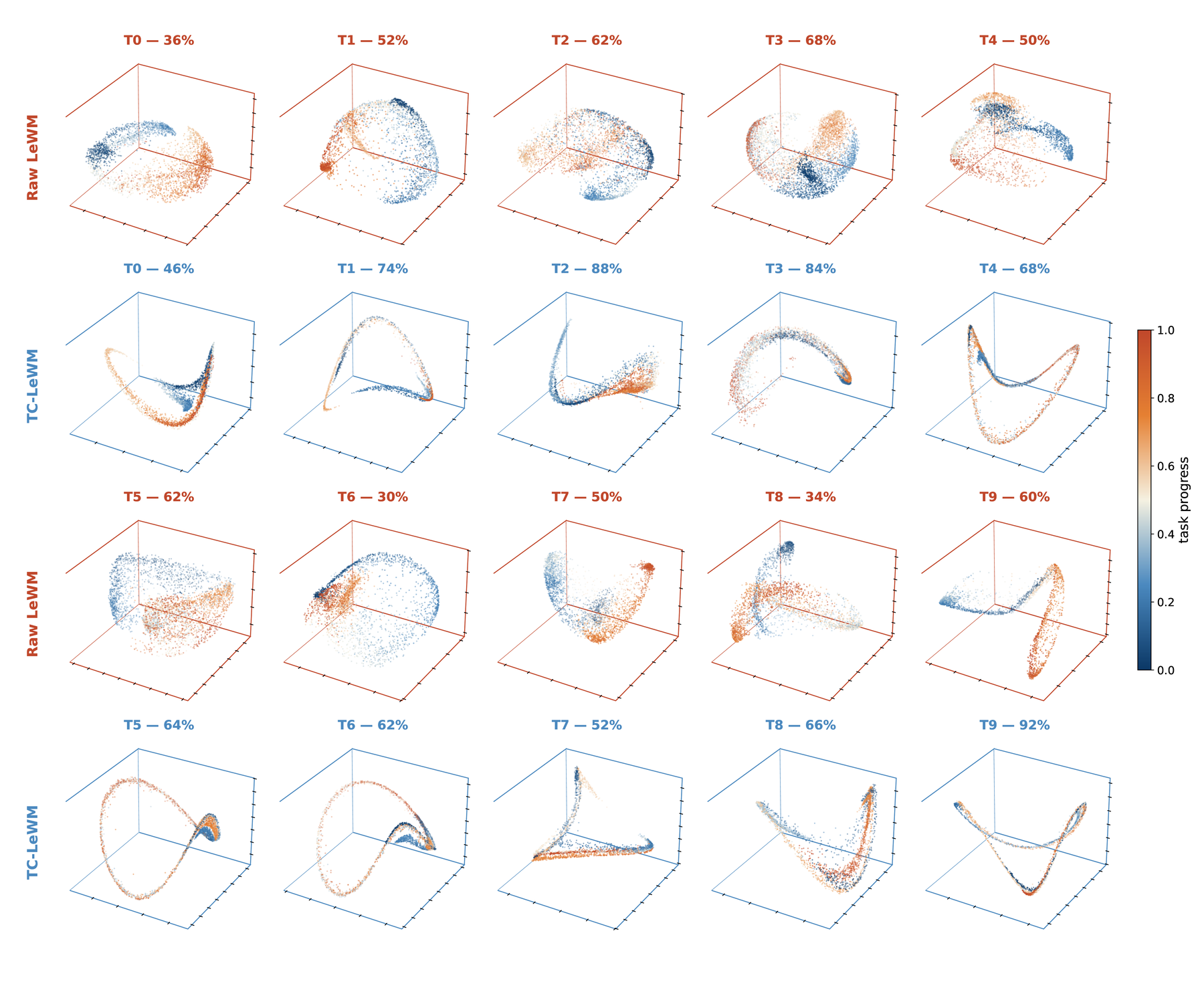
What changes in the representation
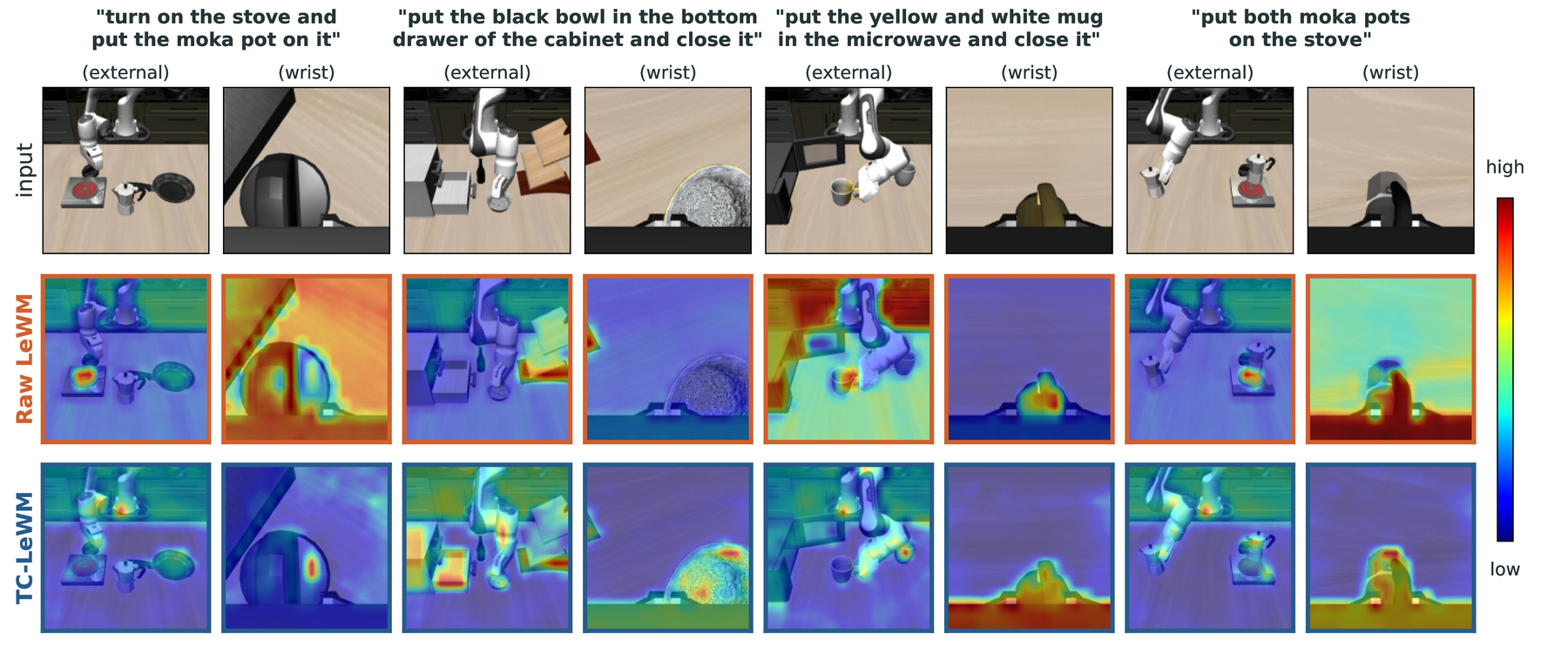
The downstream gains are accompanied by consistent changes in the learned representations: more centered-residual variation, less trajectory-identity variation, and higher linear decodability of robot state and dynamics.
BibTeX
@misc{liu2026tcsigreg,
  title         = {Temporally Centered SIGReg Improves LeWorldModel Representations for Robot Policy Learning},
  author        = {Chang Liu and Fei Suo and Yanzhou Jin and Zeyu Ping and Yusuke Iwasawa and Yutaka Matsuo and Yaonan Zhu},
  year          = {2026},
  eprint        = {2607.26924},
  archivePrefix = {arXiv},
  primaryClass  = {cs.LG},
  url           = {https://arxiv.org/abs/2607.26924}
}